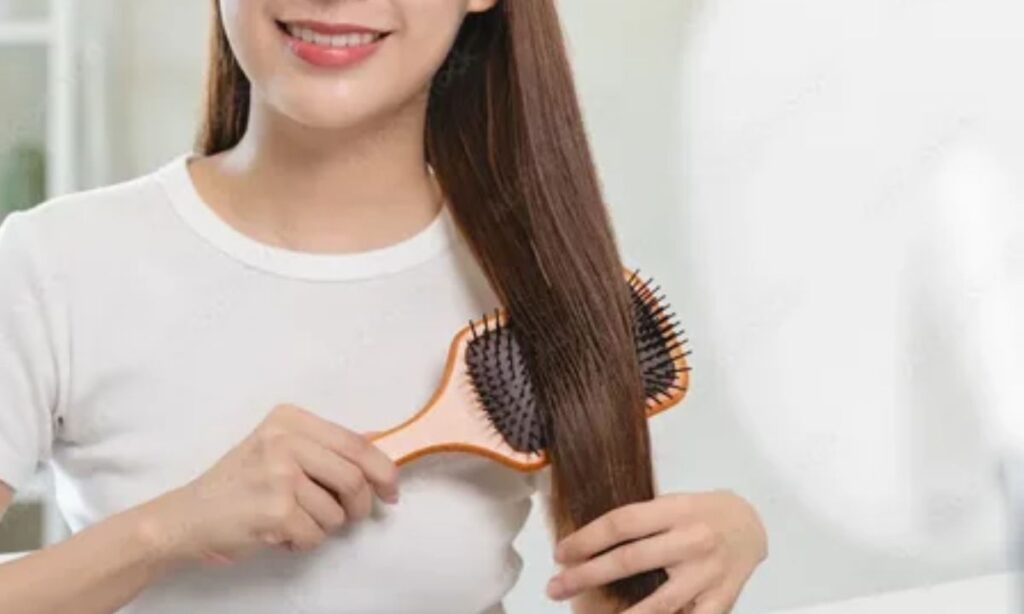
A hair brush is a tool we use to keep hair neat, smooth, and tangle-free. It helps spread natural oils from your scalp to the ends of your hair, which makes hair look shiny and healthy.
But here’s the thing: not every hair brush is the same. Different brushes are made for different hair types and styling needs. Using the wrong brush can cause breakage, frizz, or hair fall.
Let’s learn everything step by step.
What Is a Hair Brush?
A hair brush is a grooming tool with a handle and bristles. The bristles can be soft, hard, plastic, metal, or natural (like boar hair).
People use hair brushes to:
- Remove tangles
- Style hair
- Add volume
- Make hair smooth and shiny
- Distribute scalp oils
Brushing also gently massages the scalp, which can help with blood circulation and healthy hair growth.
How to Use a Hair Brush Properly
Brushing the right way is very important. Pulling hard can damage your hair.
Step-by-step guide
1️⃣ Start from the ends
Always begin brushing at the bottom of your hair to remove knots. Then slowly move upward.
2️⃣ Be gentle
Do not pull hard. If hair is very tangled, use a wide-tooth comb first.
3️⃣ Brush dry or slightly damp hair
Wet hair is weak and breaks easily. Use special detangling brushes for wet hair.
4️⃣ Clean your brush regularly
Remove stuck hair and wash the brush once a week to avoid dirt and oil buildup.
Why Using the Right Hair Brush Matters
Using the correct brush:
✔ Reduces hair breakage
✔ Prevents frizz
✔ Adds shine
✔ Makes styling easier
✔ Protects your hair type
Using the wrong brush can make hair rough, flat, or damaged.
Types of Hair Brushes & Their Uses
Let’s look at the most common types and who should use them.
1. Paddle Brush
Best for: Long, straight, or thick hair
A paddle brush has a wide, flat surface. It’s great for detangling and smoothing hair quickly.
Use it for:
- Daily brushing
- Straight styles
- Reducing frizz
2. Round Brush
Best for: Blow-drying and styling
Round brushes come in different sizes. The size changes the style you get.
Small round brush → Tight curls
Medium round brush → Waves
Large round brush → Volume & smooth blowout
Perfect if you use a hair dryer.
3. Wide-Tooth Comb Brush
Best for: Curly, wavy, or wet hair
This type is gentle and helps prevent breakage.
Use it for:
- Detangling wet hair
- Curly hair care
- Applying conditioner in shower
4. Vent Brush
Best for: Quick drying
A vent brush has holes that allow air to pass through while blow-drying.
Use it for:
- Fast drying
- Adding volume
- Short to medium hair
5. Boar Bristle Brush
Best for: Fine or thin hair
Made with natural bristles, this brush spreads scalp oils from roots to ends.
Benefits:
- Adds natural shine
- Reduces frizz
- Makes hair look smooth
Not great for very thick or curly hair.
6. Detangling Brush
Best for: Kids, damaged hair, or very knotty hair
These brushes have flexible bristles that bend while brushing.
Use it for:
- Wet or dry hair
- Reducing pain while detangling
- Preventing breakage
Which Hair Brush Is Best for Your Hair Type?
Here’s a simple guide:
| Hair Type | Best Brush |
| Straight hair | Paddle brush |
| Thick hair | Paddle or vent brush |
| Curly hair | Wide-tooth comb or detangling brush |
| Fine/thin hair | Boar bristle brush |
| Frizzy hair | Boar bristle or paddle brush |
| Short hair | Vent or small round brush |
| Long hair | Paddle or large round brush |
Tips for Healthy Brushing
✔ Don’t brush wet hair with hard bristles
✔ Brush 1–2 times a day, not too much
✔ Always hold hair near roots when removing knots
✔ Replace old brushes with broken bristles
✔ Use a heat protectant before blow-drying with a round brush
Hair Brush for Men vs Women: Comparison Table
| Feature / Need | Hair Brush for Men | Hair Brush for Women |
| Common Hair Length | Short to medium | Medium to long |
| Detangling Needs | Low (less tangles) | High (more length = more tangles) |
| Popular Brush Types | Vent brushes, small paddle, boar bristle | Paddle, round, detangling, wide-tooth |
| Styling Focus | Shape, direction, texture | Volume, sleekness, curls, waves |
| Use with Heat Tools | Sometimes (blow-drying textured styles) | Often (blow-outs, curls, straightening) |
| Scalp Massage | Mild | Often preferred for relaxation |
| Hair Thickness Variety | Thin to thick | Thin to very thick/long |
| Beard Grooming | Boar bristle beard brush | Not typically relevant |
| Frizz Control | Moderate | High priority (especially for long/curly hair) |
| Best Brush Choice Often | Small paddle or vent for styling | Paddle or detangler, plus round for styling |
Combing Hair – When It’s Better
A comb is usually better when your hair is wet, curly, or very tangled.
Why combing is good:
✔ Less pulling on knots
✔ Reduces hair breakage
✔ Great for applying conditioner
✔ Keeps curls defined
✔ Good for precise styling and parting
👉 A wide-tooth comb is best after a shower because wet hair is weak and breaks easily.
🖌️ Brushing Hair – When It’s Better
A brush is better for styling, smoothing, and daily grooming when hair is dry or slightly damp.
Why brushing is good:
✔ Makes hair smooth and neat
✔ Spreads natural scalp oils (adds shine)
✔ Helps reduce frizz
✔ Good for blow-drying styles
✔ Adds volume and shape
👉 Brushing also gives a gentle scalp massage, which can help circulation.
⚖️ So Which One Should YOU Use?
| Situation | Better Tool |
| Wet hair | Wide-tooth comb |
| Curly hair | Wide-tooth comb |
| Tangled hair | Detangling comb/brush |
| Straight dry hair | Brush |
| Styling with dryer | Round or vent brush |
| Smoothing frizz | Boar bristle brush |
🚫 When NOT to Brush
Avoid brushing:
❌ Very wet hair (unless using a wet brush)
❌ Tight curls when dry (causes frizz)
❌ Hair with heavy knots (detangle first with a comb)
✅ Final Answer
Combs are safer for detangling. Brushes are better for smoothing and styling.
Most people actually need both in their hair routine.
Final Thoughts
A hair brush is not just a basic tool it’s an important part of your hair care routine. When you use the right brush for your hair type, your hair becomes smoother, healthier, and easier to manage.
So next time you pick up a brush, make sure it matches your hair needs, not just what looks nice in the store 😊
Want help choosing a brush for your exact hair type (curly, damaged, oily, etc.)? Tell me your hair type and length!