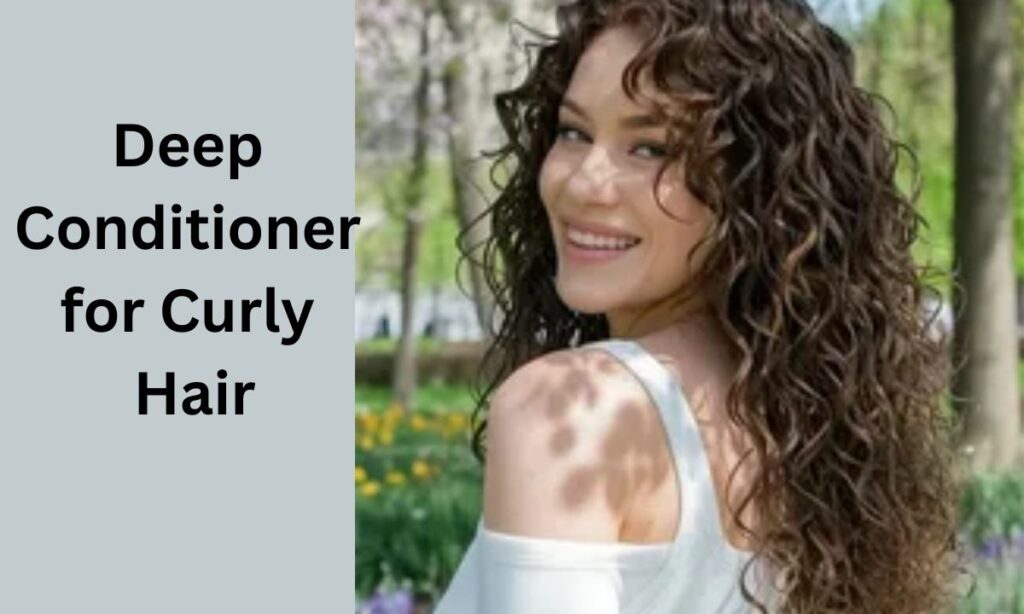
Deep conditioner for curly hair is not just another step in a hair routine it is often the difference between dry, frizzy curls and soft, defined, healthy hair. Because curly hair naturally struggles to retain moisture, deep conditioning plays a critical role in restoring hydration, improving elasticity, and preventing breakage.
In this comprehensive guide, you’ll learn what a deep conditioner is, why curly hair needs it, how to use it correctly, which ingredients matter most, and how to avoid common mistakes. Whether you have 2C waves or tight 4C coils, this article will help you choose and use the best deep conditioner for curly hair with confidence.
What Is a Deep Conditioner for Curly Hair?
A deep conditioner is an intensive conditioning treatment designed to penetrate the hair shaft and deliver long-lasting moisture and nourishment. Unlike regular conditioners, which mainly coat the surface of the hair, deep conditioners work from within, targeting dryness, damage, and weakness.
For curly hair, this deeper penetration is essential. The twists and bends in curly strands make it harder for natural oils to travel from the scalp to the ends. As a result, curls lose moisture faster and become prone to frizz, breakage, and dullness.
Key difference:
A deep conditioner for curly hair contains higher concentrations of moisturizing agents, natural oils, and strengthening ingredients than everyday conditioners.
Why Curly Hair Needs Deep Conditioning More Than Other Hair Types
Curly hair is structurally different from straight hair, and that difference directly affects moisture retention.
The Structure of Curly Hair
Curly strands have an uneven, spiral-shaped cuticle. This raised cuticle allows moisture to escape more easily, leaving curls dry and fragile. The tighter the curl pattern, the greater the challenge.
Common Curly Hair Problems Deep Conditioning Solves
Deep conditioning helps address:
- Chronic dryness
- Frizz and puffiness
- Breakage and split ends
- Loss of curl definition
- Rough or brittle texture
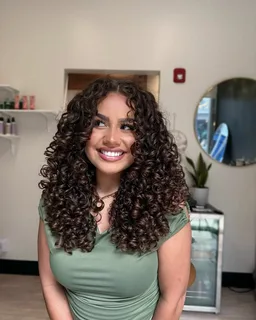
With consistent deep conditioning, curls become softer, shinier, and easier to manage.
Deep Conditioner vs Regular Conditioner
Many people assume these products do the same thing, but they serve very different purposes.
| Feature | Regular Conditioner | Deep Conditioner |
|---|---|---|
| Penetration | Surface-level | Deep into hair shaft |
| Strength | Lightweight | Highly concentrated |
| Use Frequency | Every wash | Weekly or biweekly |
| Purpose | Detangle & soften | Repair & hydrate |
A regular conditioner is ideal for daily maintenance, while a deep conditioner is meant for intensive care.
Deep Conditioner vs Hair Mask for Curly Hair
This comparison often causes confusion. While the terms are sometimes used interchangeably, they are not always identical.
- Deep conditioners focus primarily on hydration and repair
- Hair masks may target specific issues such as protein repair, scalp care, or shine
For curly hair, a deep conditioning mask that emphasizes moisture retention is often the most effective option.
Benefits of Using a Deep Conditioner for Curly Hair
Regular deep conditioning offers visible and long-term benefits for curls.
Major Benefits
- Deep hydration that lasts beyond wash day
- Improved elasticity, reducing breakage
- Enhanced curl definition and clumping
- Frizz control in humid or dry weather
- Softer texture and better manageability
“Once I started deep conditioning weekly, my curls stopped snapping and finally started retaining length.” — Curly hair blogger
How Often Should You Deep Condition Curly Hair?
There is no one-size-fits-all rule, but frequency depends on curl type, porosity, and damage level.
General Guidelines
- Once a week: Dry, damaged, or color-treated curls
- Every other week: Healthy curls with minimal heat use
- Once a month: Fine or low-porosity curls that get weighed down easily
Curl Type Reference
- 2C–3A curls: Every 1–2 weeks
- 3B–3C curls: Weekly
- 4A–4C hair: Weekly or every 5–7 days
Listening to your hair is key. If curls feel limp, you may be over-conditioning. If they feel rough, you may need more moisture.
How to Use a Deep Conditioner on Curly Hair (Step-by-Step)
Correct application ensures maximum results.
Step 1: Start With Clean Hair
Use a gentle, sulfate-free cleanser to remove buildup.
Step 2: Apply to Damp Hair
Deep conditioners work best on wet or damp hair, not dry strands.
Step 3: Distribute Evenly
Section hair and apply generously from mid-lengths to ends. Use fingers or a wide-tooth comb.
Step 4: Leave It On
Most treatments work best in 5–10 minutes, though some benefit from 20–30 minutes.
Step 5: Rinse and Style
Rinse thoroughly and follow with your regular styling routine.
Ingredients to Look for in a Deep Conditioner for Curly Hair
Ingredient choice can make or break results.
Moisturizing Ingredients
- Shea butter
- Coconut oil
- Argan oil
- Avocado oil
- Aloe vera
Strengthening Ingredients
- Hydrolyzed proteins (for damaged curls)
- Amino acids
Important: Balance matters. Too much protein can cause stiffness.
Ingredients to Avoid in Deep Conditioners for Curly Hair
Some ingredients can undo all your hard work.
Avoid:
- Sulfates (strip natural oils)
- Drying alcohols
- Heavy, non-water-soluble silicones
These can cause buildup, dryness, and dull curls over time.
Protein vs Moisture: Finding the Right Balance
Curly hair thrives on balance.
Signs of Protein Overload
- Hair feels stiff or straw-like
- Increased breakage
- Loss of softness
Signs of Moisture Overload
- Limp, mushy curls
- Poor curl definition
- Excessive frizz
Choosing the right deep conditioner—protein-rich or moisture-focused—depends on what your curls need at the moment.
Best Deep Conditioner for Curly Hair (By Hair Need)
Different curl concerns require different formulas.
For Dry & Damaged Curls
Look for rich, buttery textures with oils and humectants.
For Frizz-Prone Hair
Choose deep conditioners with anti-frizz oils and smoothing agents.
For Low Porosity Curls
Lightweight, water-based formulas work best.
For High Porosity Curls
Heavier creams that seal moisture are ideal.
For Color-Treated Curly Hair
Opt for gentle, sulfate-free deep conditioners that prevent fading.
Common Deep Conditioning Mistakes Curly-Haired People Make
Even the best product won’t work if used incorrectly.
Common mistakes include:
- Over-conditioning too frequently
- Using the wrong formula for hair porosity
- Applying on dry hair
- Skipping proper rinsing
Avoiding these mistakes helps curls stay healthy and balanced.
Can You Deep Condition Curly Hair Too Much?
Yes. Overuse can lead to product buildup and moisture overload. If curls feel overly soft and lack structure, reduce frequency and switch to a lighter formula.
Deep Conditioning Curly Hair at Home vs Salon Treatments
| Aspect | At Home | Salon |
|---|---|---|
| Cost | Low | High |
| Convenience | High | Moderate |
| Customization | Medium | High |
| Frequency | Regular | Occasional |
Home treatments are sufficient for most people, while salon treatments are useful for severely damaged hair.
Weekly Deep Conditioning Routine for Curly Hair
A simple routine keeps curls thriving:
- Cleanse
- Deep condition
- Rinse thoroughly
- Style with leave-in products
Consistency is more important than complexity.
FAQs About Deep Conditioner for Curly Hair
How long should you leave a deep conditioner on curly hair?
Most work best in 5–10 minutes, but always check instructions.
Can deep conditioner replace regular conditioner?
No. Deep conditioners are treatments, not daily products.
Should you deep condition before or after shampoo?
Always after shampooing.
Is heat necessary?
Heat can help low-porosity hair absorb moisture but isn’t always required.
Conclusion
A deep conditioner for curly hair is one of the most powerful tools you can use to maintain healthy, hydrated, and defined curls. By choosing the right formula, applying it correctly, and maintaining balance, you can transform dry, fragile curls into soft, resilient hair.
Deep conditioning isn’t about doing more it’s about doing it right and consistently. Listen to your curls, adjust as needed, and enjoy the results.